
Multi-agent orchestration, in plain words
Multi-agent orchestration breaks a job into roles, sends each part to the right AI agent, carries the context between them and brings important decisions back to a person.
Meet the conductor
What work would you give an AI team?
Three jobs a coordinated team can own
Serve a customer
A front-desk agent understands the request, a specialist drafts the answer and a person receives anything that needs judgment.
Qualify a sale
One agent gathers the need, another compares approved options and a follow-up agent prepares the agreed next step.
Deliver weekly work
A manager agent assigns research, writing and checks to specialists, then presents one result and its evidence for approval.
Watch a team hand off one real job
This is the same manager-and-specialist pattern NetShow uses: the handoff carries the brief, each role returns a typed result and the final action waits at the approval boundary.
Triage
“I need help choosing a plan for three locations.” The triage agent identifies pricing and deployment as separate questions.
Specialists
The pricing specialist reads the approved ladder while the deployment specialist checks the locations and channels.
One answer
The manager combines both results, cites the assumptions and asks a person to approve the next action. Nothing is bought or sent here.
The working product, not a mockup
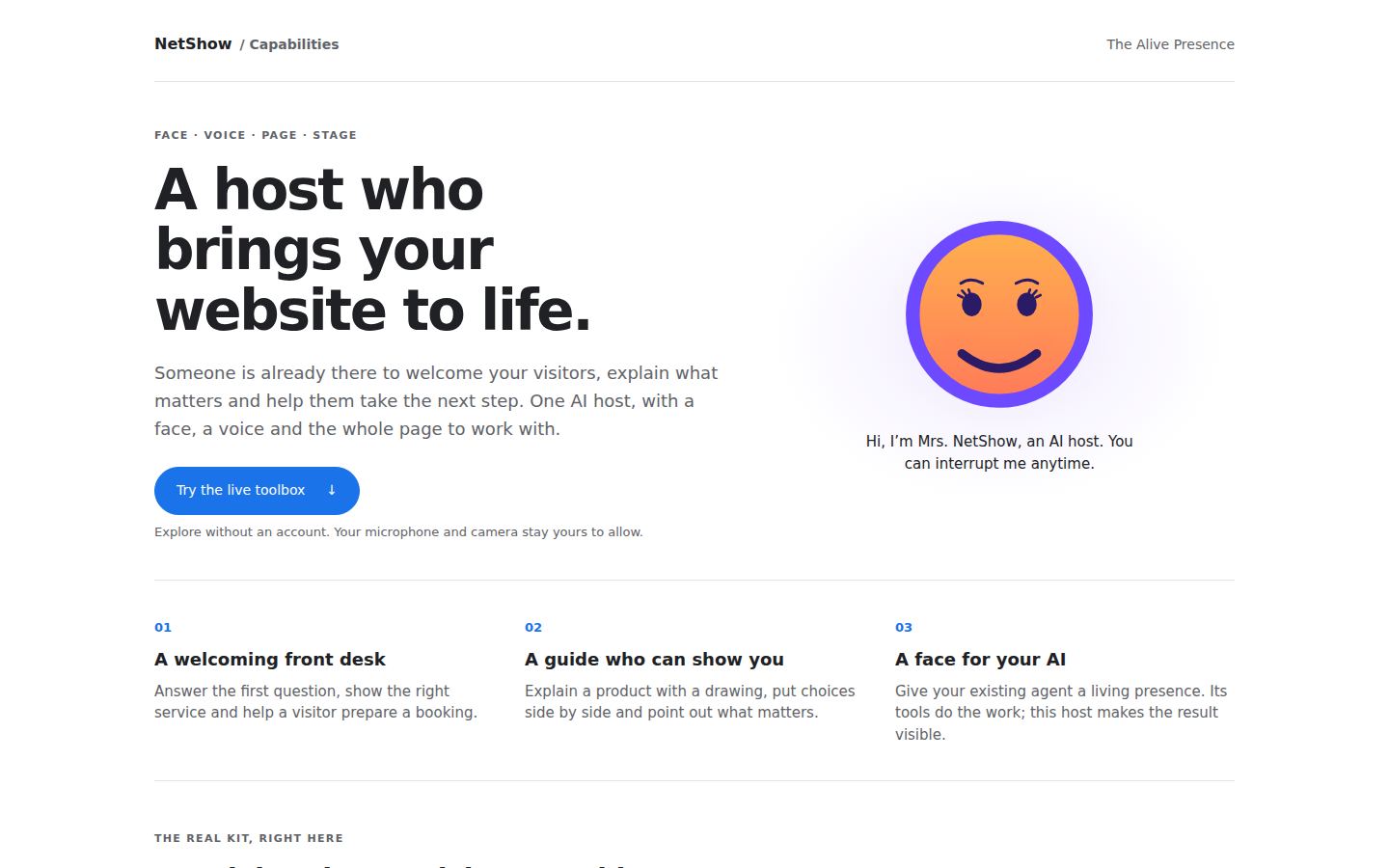
These are repository-tracked captures of NetShow’s real multi-agent Round Table, where several agents work together, and the live host that greets each visitor.

One team, connected to the rest of NetShow
The orchestration layer connects AI employees to shared business knowledge, approved tools, voice, the NetShow Harness and human approval. You see one accountable flow instead of managing separate chatbots.
Meet the AI employeesHonest monthly prices
Start with one AI Front Desk, move to a coordinated AI Team, or use an Enterprise AI Workforce on your infrastructure. Exact scope is agreed in writing.
AI Front Desk
$699 a month
AI Team
$4,999 a month
Enterprise AI Workforce
$9,999 a month
One next step
Build your first AI team
Name one result your business needs. We will map the specialist roles, the handoffs and the decisions that must stay with a person.
Choose the first job See all pricing